Wikipedia sourcing: How reliable sources keep the encyclopedia trustworthy
When you read a Wikipedia article, the Wikipedia sourcing, the practice of backing up every claim with published, reliable references. It's not just a rule—it's the foundation of everything Wikipedia stands for. Without it, Wikipedia would be just another collection of opinions. But because every fact must be tied to a source, it becomes one of the most carefully checked knowledge bases on the planet. This isn’t about popularity or how often something gets shared—it’s about whether a claim can be proven with evidence from books, journals, or trusted news outlets.
Citations on Wikipedia, the footnotes and references that link claims to external sources. These aren’t decorative—they’re the backbone of accountability. If an article says a country’s population is 50 million, there’s a source behind it: a national census, a UN report, or a peer-reviewed study. And if that source disappears or gets debunked? The citation gets flagged, updated, or removed. Editors don’t guess. They verify. This system works because thousands of volunteers check every edit, not just for grammar, but for truth. Tools like source verification, the process of checking whether a reference is credible, accessible, and independent help catch fake websites, paywalled articles, or blogs masquerading as news. The goal? No claim stands unless it’s supported by something real.
Wikipedia doesn’t accept everything. A tweet? Not good enough. A personal blog? No. Even a major newspaper might be rejected if it has a clear bias or no track record on the topic. That’s why local news sources matter—when they’re reliable, they bring in vital coverage from regions ignored by global media. But when local papers shut down, Wikipedia loses a key lifeline. That’s why editors now push harder for archived reports, academic papers, and government data. It’s not perfect, but it’s the best system we’ve got for open knowledge.
Behind every well-sourced article are real people—librarians, students, journalists—who know how to track down facts. They’re the ones who fix broken links, update outdated references, and fight edit wars over whether a source counts as "reliable." And when AI starts generating fake citations? Human editors step in to spot the lies. This isn’t magic. It’s discipline. It’s patience. It’s the quiet work of making sure what you read online can be trusted.
What you’ll find below are real stories from inside Wikipedia’s sourcing system: how bots catch fake citations, how editors debate whether a podcast counts as a source, how a single missing reference can derail an entire article, and why some of the most important edits never make headlines—they just make the truth harder to ignore.
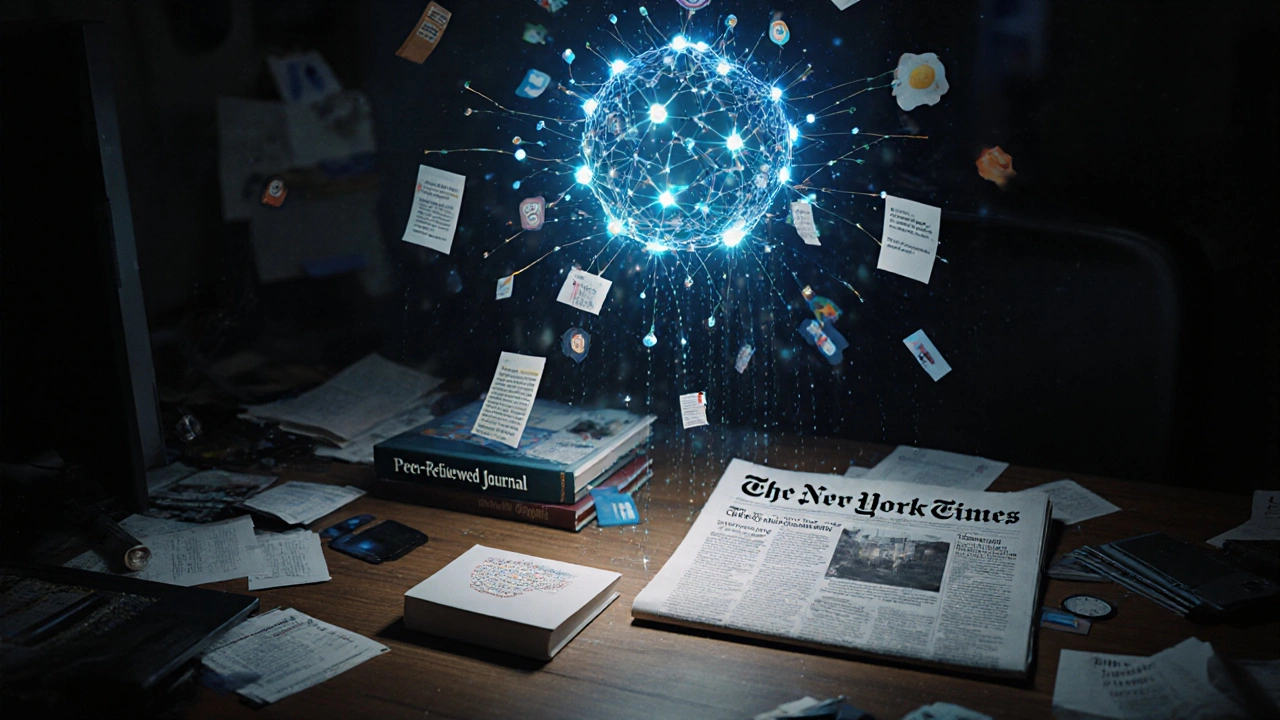
How Wikipedia’s Sourcing Standards Fix AI Misinformation
AI often generates false information because it lacks reliable sourcing. Wikipedia’s strict citation standards offer a proven model to fix this-by requiring verifiable sources, not just confident-sounding guesses.