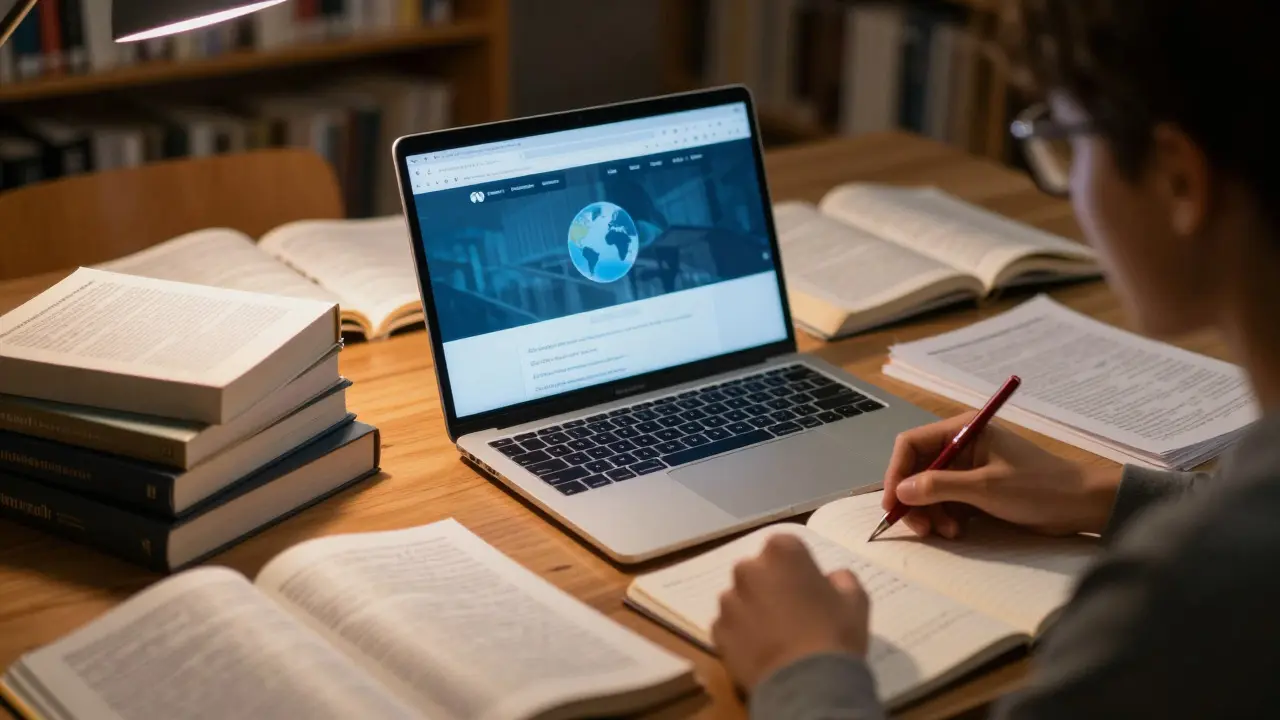
Imagine turning in a research paper where your primary source is a page you helped edit last semester. For many students, this isn't a hypothetical-it’s the reality of navigating modern academic expectations. The question isn’t just whether you can cite Wikipedia is a free, web-based, multilingual encyclopedia written collaboratively by volunteers around the world. It’s whether your professor will read past that first line without rolling their eyes.
The answer varies wildly from one department to the next, and even between two professors teaching the same course. There is no single global rule. Instead, there is a patchwork of syllabi, departmental guidelines, and unwritten norms that shape how Wikipedia citation is perceived in higher education.
The Spectrum of Instructor Opinions
If you survey faculty across different disciplines, you’ll find three distinct camps. Understanding where your instructor falls helps you avoid costly mistakes.
- The Strict Prohibitors: These instructors view Wikipedia as a starting point for curiosity, not a valid source for evidence. They often require peer-reviewed journals or primary documents exclusively. For them, citing Wikipedia signals a lack of deeper research.
- The Conditional Acceptors: This is the largest group. They allow Wikipedia citations only for specific purposes, such as defining basic terms, providing historical context, or finding references to other sources. They rarely accept it as a primary argument for complex claims.
- The Open Embracers: Found mostly in digital humanities, media studies, and information science, these instructors value Wikipedia as a case study in collaborative knowledge production. They may ask students to analyze its editing history or bias rather than just use it as a fact repository.
The key takeaway? Always check the syllabus. If the syllabus is silent, ask. A quick email asking, "Is Wikipedia acceptable for background definitions?" costs nothing and prevents a dropped grade.
Why Do Instructors Hesitate?
To understand the resistance, you have to look at what Wikipedia represents in an academic setting. The core issue isn’t accuracy-though it exists-it’s stability and accountability.
In traditional academia, when you cite a book or journal article, you are citing a specific version reviewed by experts. With Wikipedia, the content changes daily. A claim made today might be edited out tomorrow. This volatility makes it difficult for instructors to verify exactly what a student saw when they wrote their paper.
Furthermore, the anonymous nature of contributors means there is no clear author to hold accountable for errors. While the community moderation system works well for popular topics like "World War II" or "Albert Einstein," niche subjects can remain unpolished or biased for years. Instructors worry that students will mistake the presence of a hyperlink for the presence of truth.
When Is Citing Wikipedia Actually Smart?
Despite the skepticism, Wikipedia has legitimate uses in academic work. Here is where it shines:
- Defining Basic Terminology: If you need to define a common concept (like "inflation" or "mitochondria") for a general audience, Wikipedia is often sufficient. Just ensure the definition matches standard textbooks.
- Finding Primary Sources: This is the pro move. Use Wikipedia to identify the original studies, government reports, or news articles that back up a claim. Then, go find those primary sources and cite them instead.
- Contextual Background: For broad historical overviews or geographical data, Wikipedia provides a solid snapshot. It’s great for orienting yourself before diving into specialized literature.
- Case Studies in Information Science: If your course is about library science, digital literacy, or crowd-sourcing, Wikipedia is the subject itself. Analyzing its talk pages, revision history, and citation practices is a valid academic exercise.
Avoid using it for controversial political opinions, emerging scientific discoveries, or highly specific local events unless you cross-reference with at least two other reputable sources.
How to Cite Wikipedia Correctly
If your instructor allows it, formatting matters. Most universities follow either MLA or APA style guides. Both have specific rules for citing websites that change frequently.
| Style Guide | Key Requirement | Example Format Structure |
|---|---|---|
| MLA 9th Edition | Include access date because content changes | "Entry Title." Wikipedia, Wikimedia Foundation, [Day Month Year], www.wikipedia.org/wiki/Entry_Title. Accessed [Day Month Year]. |
| APA 7th Edition | Include retrieval date if no publication date | Author(s). (Year, Month Day). Entry title. In Wikipedia. Retrieved [Month Day Year], from URL |
Note that for both styles, the "accessed" or "retrieved" date is crucial. It tells the reader exactly which version of the page you used. Without it, your citation is technically incomplete.
Navigating Departmental Differences
Your major plays a huge role in how strict the rules are. Let’s break down some common trends:
- Humanities & Arts: Often more flexible with secondary sources but strict about primary texts. Wikipedia might be okay for biographical sketches of artists but risky for literary analysis.
- Sciences (Biology, Chemistry, Physics): Very strict. They prefer peer-reviewed journals (like Nature or Science). Wikipedia is seen as too derivative. Use it to find the DOI (Digital Object Identifier) of the original paper.
- Social Sciences: Mixed. Sociology and anthropology departments may accept it for demographic data if cited correctly, while psychology departments usually demand empirical studies.
- Business & Law: Generally skeptical. Law students must cite statutes and case law, not summaries. Business students should use industry reports or financial databases.
When in doubt, look at the bibliography of a recent paper published by your professor. If they don’t cite Wikipedia, chances are they won’t want to see it in your work either.

Pro Tips for Students
You can turn the potential risk of using Wikipedia into a demonstration of critical thinking. Here are a few strategies:
- Cross-Reference Immediately: Never stop at Wikipedia. Click the links in the references section. Verify the claim against at least one other credible source (a .gov site, a university press, or a major newspaper).
- Check the Talk Page: Before citing a controversial topic, look at the Wikipedia talk page. If editors are arguing fiercely about a fact, that fact is likely unstable. Avoid citing it until consensus is reached.
- Use the History Tab: If a number or date seems off, check the revision history. You might find that the current version was recently changed, indicating uncertainty.
- Ask for Clarification in Writing: Email your professor with a specific example. "I found conflicting dates for Event X in Source A and Wikipedia. Should I prioritize the peer-reviewed source?" This shows you are doing your homework.
Ultimately, Wikipedia is a tool, not a destination. Treat it like a map: useful for getting your bearings, but not the territory itself. Your job as a student is to explore the territory directly.
Frequently Asked Questions
Is it cheating to cite Wikipedia?
No, it is not cheating if your instructor allows it. Cheating implies deception. As long as you cite it properly and follow the syllabus guidelines, it is a valid source choice. However, relying solely on it for high-level analysis may result in a lower grade due to lack of depth, not because it is "cheating."
How do I know if my professor accepts Wikipedia?
First, check your course syllabus under the "Sources" or "Research Guidelines" section. If it’s not listed, send a brief, polite email asking for clarification. Professors appreciate students who seek clarity rather than guessing. Look for phrases like "peer-reviewed sources required" (which excludes Wikipedia) or "secondary sources allowed" (which might include it).
What is the difference between a primary and secondary source regarding Wikipedia?
Wikipedia is almost always a secondary source. It summarizes information from primary sources (original documents, interviews, raw data) and other secondary sources. In academic writing, primary sources are generally preferred for making new arguments because they provide direct evidence. Wikipedia is useful for finding those primary sources.
Can I cite a Wikipedia entry that I edited myself?
Yes, but disclose it. If you significantly contributed to the entry, mention it in a footnote or cover letter. Transparency shows integrity. However, be aware that self-citation requires extra scrutiny from the reader, so ensure your edits were neutral and well-referenced.
Are all Wikipedia articles equally reliable?
No. Articles about famous people, major historical events, and established scientific concepts tend to be heavily monitored and accurate. Niche topics, recent events, or obscure figures may have fewer editors and less rigorous checking. Always assess the quality of the references within the article before trusting the content.