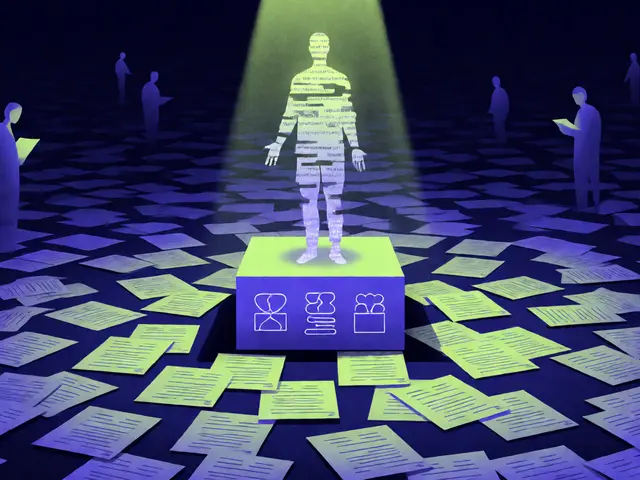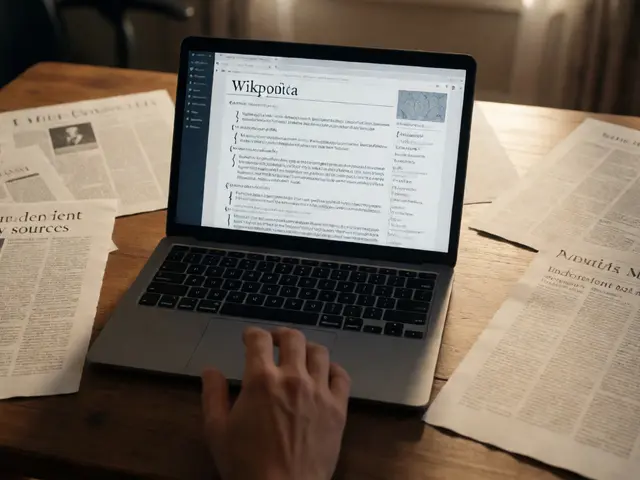
You submit your term paper with a dozen references. Your professor returns it with one red mark next to the bibliography: "No tertiary sources." You feel cheated. Wikipedia is everywhere, it’s updated constantly, and for many topics, it’s more current than any textbook you can find in the library. So why do academics treat it like a forbidden fruit? It isn’t about laziness or elitism. It’s about a fundamental difference in how knowledge is verified.
The conflict between student expectations and academic rigor centers on the definition of a primary source versus a a secondary interpretation of primary data. When you cite a journal article, you are citing the original researcher’s findings. When you cite Wikipedia, you are citing an anonymous editor’s summary of those findings. That gap is where errors creep in, and that is exactly what professors want to avoid.
The Hierarchy of Evidence in Academia
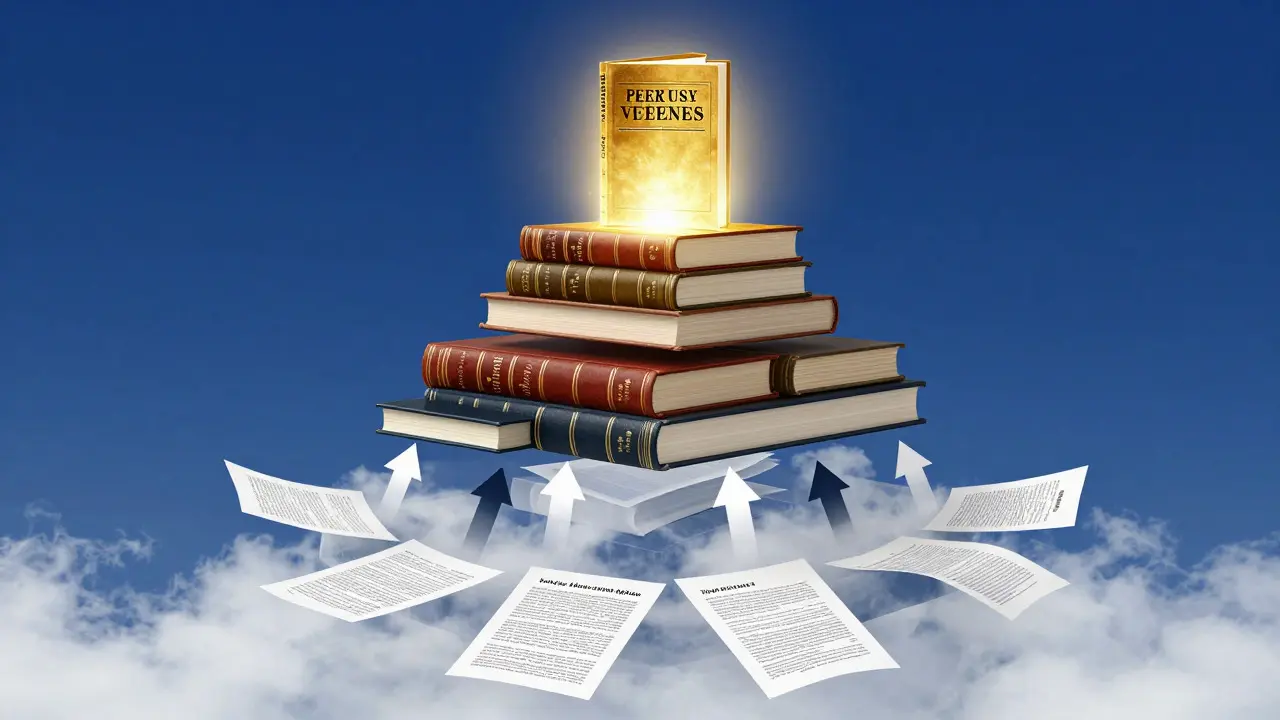
To understand the ban, you have to look at how scholars rank information. In fields like medicine, law, and history, there is a strict hierarchy. At the top sit peer-reviewed journals, which publish original research after scrutiny by experts in the field. Below them are textbooks, which synthesize established knowledge. At the bottom sits the encyclopedia-whether it’s Britannica or Wikipedia. These are considered tertiary sources, meant for quick overviews, not for proving specific claims.
Professors restrict Wikipedia because they want you to practice the skill of finding the original evidence. If you claim that a certain chemical reaction occurs at 50 degrees Celsius, you don’t cite a blog post that says so; you cite the lab report where the experiment was run. Wikipedia tells you *what* happened; primary sources tell you *how we know* it happened. Skipping that step weakens your argument before it starts.
Is Wikipedia Actually Reliable?
Here is the counter-argument that students often make: Wikipedia has millions of editors, and bad information usually gets fixed quickly. For broad, stable facts-like the capital of France or the date of World War II-Wikipedia is incredibly accurate. A study by Nature in 2005 found that factual errors in Wikipedia were comparable to those in the Encyclopedia Britannica, though Wikipedia had more missing entries.
However, reliability breaks down when you move into niche or controversial topics. Because anyone can edit a page, recent changes might reflect a single editor’s bias rather than consensus. If you are writing about a new political scandal or a cutting-edge technology, the Wikipedia entry might be three days old and based on a single news article. By the time you turn in your paper, that news article might have been retracted or corrected. In academia, stability matters as much as accuracy.
The Difference Between Using and Citing
This is the most common misunderstanding. Most professors do not ban Wikipedia from *use*; they ban it from *citation*. There is a huge difference. You should absolutely use Wikipedia to get started. Read the intro, scan the table of contents, and check the reference list at the bottom. Those references are your gold mine. They point you to the books, articles, and reports that actually contain the data you need.
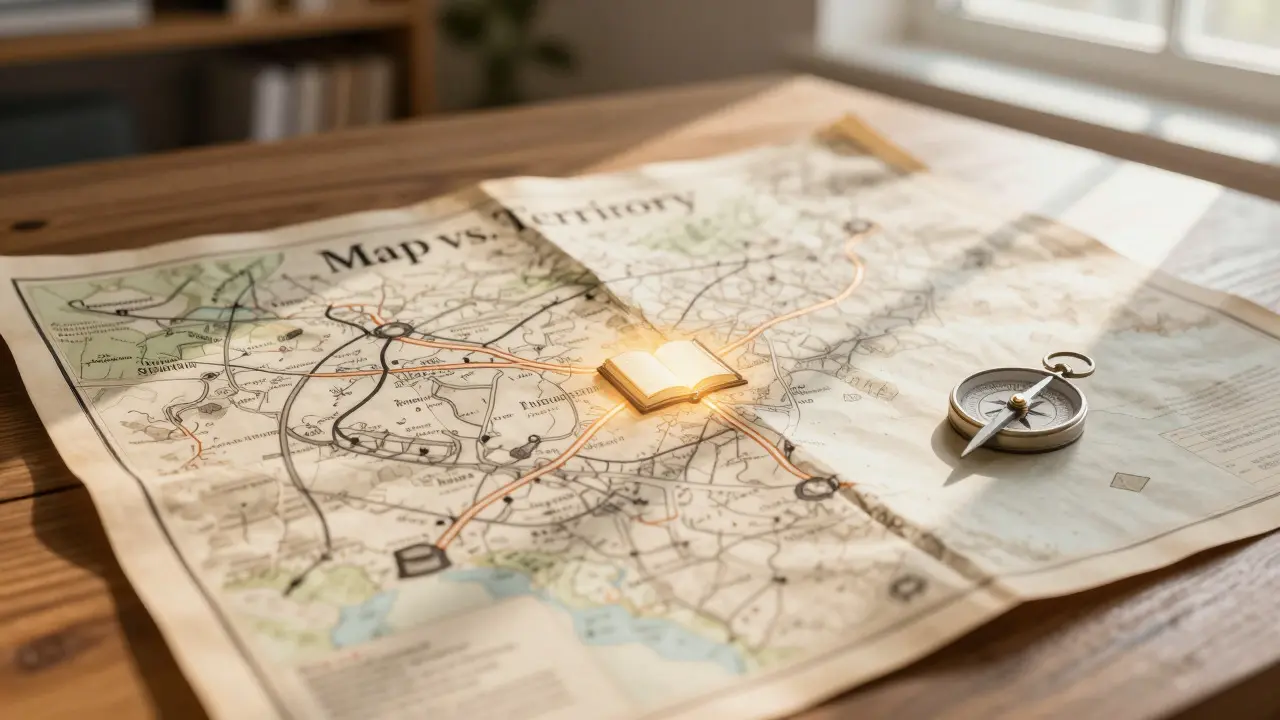
Think of Wikipedia as a map, not the territory. It shows you where the roads are, but you still have to drive the car yourself. If you cite the map, you haven’t gone anywhere. If you follow the map to the destination and cite the destination, you’ve done the work. This approach turns Wikipedia from a liability into a powerful research tool.
When Wikipedia Is Acceptable (Rarely)
Are there exceptions? Yes, but they are narrow. In some introductory courses, if you are describing a very well-known historical event, a professor might allow one or two Wikipedia citations if no other source is available. In digital humanities or media studies classes, you might analyze Wikipedia itself as a cultural artifact. You could write a paper on how the editing process reflects societal biases, using the edit history as your primary data. In these cases, Wikipedia isn’t the source of truth; it’s the subject of study.
Even then, you need permission. Never assume. Ask your instructor explicitly: "Can I use Wikipedia as a starting point, and must I trace all claims back to primary sources?" Getting this answer in writing saves you from losing points later.
How to Convert Wikipedia Leads into Academic Citations
Here is a practical workflow that works for almost any topic:
- Start with the Wikipedia page. Read the first two paragraphs and the conclusion. Identify the key terms and concepts.
- Check the "References" section. Look for footnotes or inline citations. Prioritize those that link to .edu domains, major newspapers, or journal publishers like JSTOR or PubMed.
- Verify the claim. Go to the cited source. Does it actually say what the Wikipedia page implies? Often, the nuance is lost in translation. The original author might have said "suggests a correlation," while Wikipedia states "causes a change."
- Cite the original. Use the bibliographic details from the journal article or book, not the URL of the Wikipedia page.
- Document your trail. If your professor allows it, mention in a footnote that you used Wikipedia to locate the source. This shows transparency and research savvy.
This method ensures you meet academic standards while leveraging the speed of online encyclopedias. It also builds a habit that will serve you in graduate school or professional research, where relying on summaries is a career-limiting move.
The Broader Debate: Open Access vs. Gatekeeping
Some critics argue that banning Wikipedia reinforces academic gatekeeping. Textbooks are expensive, and paywalls on journals keep knowledge locked away. Wikipedia represents the democratization of information. If a student cannot afford a $150 textbook, Wikipedia is their only option. Should they be penalized for using free resources?
Academics counter that the goal isn’t to punish poverty but to teach critical thinking. The restriction is a training wheel. Once you learn to verify sources independently, you won’t need the wheel. Moreover, many universities now offer free access to digital libraries through their institutional logins. Students who think they have no choice often just haven’t explored their campus resources yet. Librarians are trained to help you find open-access versions of paid articles, which bridges the gap between cost and credibility.
| Source Type | Reliability Level | Best Used For | Citation Status |
|---|---|---|---|
| Peer-Reviewed Journal | High | Proving specific arguments, data analysis | Required |
| Academic Book | High | Theoretical frameworks, historical context | Recommended |
| Reputable Newspaper | Moderate | Current events, public opinion | Situational |
| Wikipedia | Variable | Initial overview, locating primary sources | Generally Prohibited |
What to Do If You’re Stuck
If you find yourself staring at a blank screen because every source is behind a paywall, don’t panic. Contact your university librarian. They have databases that aggregate thousands of journals for free. If the topic is truly obscure and no primary source exists, write a short email to your professor explaining the situation. Propose a plan: "I found X on Wikipedia, but the original source is Y, which is unavailable. May I cite the secondary source Z instead?" Most instructors appreciate the initiative and the honesty far more than they penalize the lack of perfect resources.
Ultimately, the debate isn’t about whether Wikipedia is good or bad. It’s about what kind of thinker you want to be. Are you a consumer of information, or a creator of it? The citation rules are designed to push you toward the latter. Once you master that shift, you’ll find that Wikipedia becomes less of a crutch and more of a compass, guiding you toward deeper, more credible knowledge without ever needing to appear on your final bibliography.
Is Wikipedia always wrong?
No. For stable, well-documented topics, Wikipedia is highly accurate. The issue is not constant error, but the lack of guaranteed verification for every single edit. In academic contexts, the burden of proof is on you to show the original source, not to trust the summary.
Can I cite Wikipedia in a high school essay?
Often, yes. High school teachers may have looser standards than college professors. However, it is always safer to check the rubric or ask. Even in high school, citing primary sources demonstrates higher-level thinking and can earn extra credit.
What if the Wikipedia reference is broken?
Use the Wayback Machine or search for the title of the referenced article directly in your university library database. If you cannot find the original, look for another Wikipedia reference that leads to a working source. Avoid guessing the content of the missing source.
Does using Wikipedia count as plagiarism?
Not if you paraphrase correctly and cite the source. However, copying text directly from Wikipedia without quotation marks or proper attribution is plagiarism. Since Wikipedia uses Creative Commons licensing, you must give credit to the authors listed on the page's history tab if you quote extensively.
Which subjects allow Wikipedia citations more easily?
Subjects focused on culture, media, or internet phenomena often allow Wikipedia as a valid source because the platform itself is part of the subject matter. In hard sciences like chemistry or physics, it is rarely accepted because precise data requires original experimental records.