Imagine trying to run a global encyclopedia from one office. It sounds impossible, right? That is exactly why the Wikimedia Foundation is a non-profit organization that supports free knowledge projects like Wikipedia and Wikidata relies on its network of local partners. If you have ever wondered how Wikipedia stays relevant in Lagos, Tokyo, or Buenos Aires, the answer lies in the Affiliates Program. This structure allows independent groups to operate locally while staying connected to the global mission. It is not just about donating money; it is about building trust, organizing events, and ensuring that diverse voices shape the world's largest reference work.
What Exactly Is the Affiliates Program?
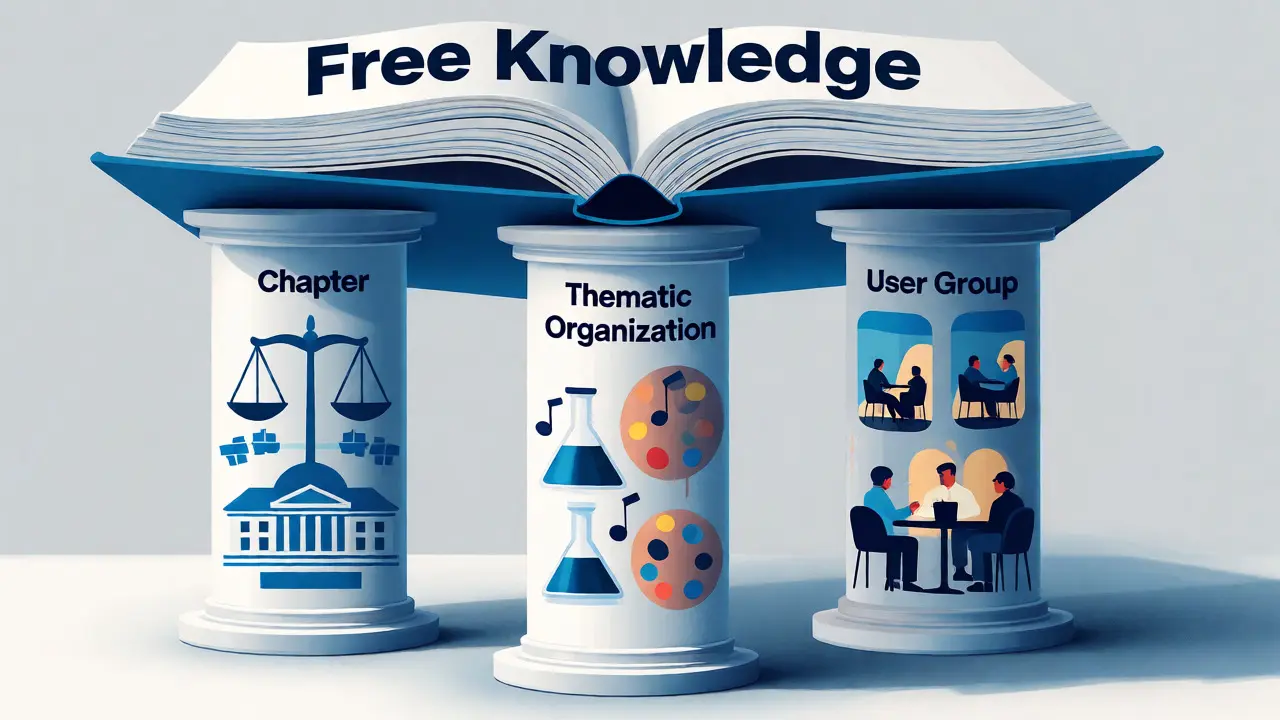
The Wikimedia Affiliates Program is a framework that recognizes three types of organizations: Chapters, Thematic Organizations, and User Groups. These entities are legally independent but share the same goal as the Foundation: promoting free knowledge. Unlike a franchise model where headquarters dictates every move, this program encourages autonomy. A Wikimedia Chapter, for instance, operates in a specific country or region. They handle local legal issues, fundraising, and partnerships with schools or libraries. On the other hand, Thematic Organizations focus on specific topics, such as science, art, or indigenous languages, regardless of borders. User Groups are smaller, often informal collectives of editors who meet regularly to collaborate on editing campaigns or community building.
Why does this matter to you? Because it ensures that content reflects local realities. A chapter in India might prioritize articles on regional history and local dialects, while a user group in Germany might focus on digitizing archival documents. The Foundation provides support, but the affiliates do the heavy lifting on the ground. This decentralized approach prevents the project from becoming too Western-centric or academic. It brings real people into the fold, turning passive readers into active contributors.
How Do Communities Join and Stay Recognized?
Joining the program isn't automatic. You need to apply through the Affiliations Committee, a volunteer body that reviews applications based on clear criteria. First, your group must demonstrate stability. This means having a functioning board, transparent financial practices, and a track record of activity. You cannot just start a Facebook page and claim affiliate status. The committee looks for evidence of sustained engagement, such as regular meetups, successful edit-a-thons, or partnerships with educational institutions.
Once approved, the relationship requires ongoing maintenance. Affiliates must submit annual reports detailing their activities, finances, and impact. This transparency builds trust within the broader movement. If a chapter fails to meet these standards for several years, they risk losing their recognition. It is a rigorous process, but it keeps the network healthy. Think of it like a professional certification: you earn it, you maintain it, and you benefit from the credibility it brings.
The Role of Funding and Resource Sharing
Money talks, especially in non-profits. The Wikimedia Foundation offers various funding mechanisms to help affiliates grow. The most prominent is the Project Grants program, which funds specific initiatives like developing new tools, hosting conferences, or creating educational materials. However, grants are competitive. Applicants must show clear metrics for success. Did your workshop increase editor retention by 10%? Did your app download count double? Concrete data wins grants.
Beyond cash, affiliates gain access to shared resources. This includes legal templates, branding guidelines, and training materials developed centrally. For example, if a new chapter in Brazil wants to partner with a university, they can use standard agreements vetted by the Foundation’s legal team. This saves time and reduces risk. Additionally, affiliates participate in global strategy discussions. Their feedback directly influences decisions made at the headquarters level. When the Foundation planned its last major strategic shift, input from Global South affiliates was crucial in shaping priorities around mobile access and language diversity.
| Feature | Chapter | Thematic Organization | User Group |
|---|---|---|---|
| Geographic Scope | Country or Region | Global (Topic-based) | Local or Online |
| Legal Status | Registered Non-Profit | Registered Non-Profit | Informal or Lightly Registered |
| Funding Access | High (Annual Plan) | Medium (Grants) | Low (Micro-grants) |
| Primary Focus | Community Building & Advocacy | Content Quality & Expertise | Editor Engagement & Events |
| Governance | Formal Board Structure | Formal Board Structure | Flexible Leadership |
Challenges Faced by Local Communities
It is not all smooth sailing. One major challenge is burnout. Many affiliates rely on volunteers who juggle full-time jobs and family responsibilities. Sustaining momentum over years is tough. Another issue is digital divide disparities. While some communities enjoy high-speed internet and modern devices, others struggle with basic connectivity. An affiliate in rural Kenya faces different hurdles than one in Stockholm. Addressing these inequalities requires tailored solutions, not one-size-fits-all strategies.
Political sensitivity also plays a role. In some regions, government regulations restrict online speech or impose strict laws on non-profits. Affiliates must navigate these complex landscapes carefully. Sometimes, this means working closely with local authorities to ensure compliance without compromising neutrality. Other times, it involves advocating for policy changes that protect open knowledge. These political dynamics can strain resources and divert attention from core editing tasks.

Impact on Global Knowledge Equity
The ultimate test of the affiliates program is its impact on knowledge equity. Historically, Wikipedia has been criticized for bias toward English-speaking, Western perspectives. Affiliates actively combat this by encouraging contributions in underrepresented languages and cultures. For instance, the Wikimedia Indonesia chapter has launched numerous initiatives to document traditional dances and recipes, preserving cultural heritage that might otherwise disappear. Similarly, African affiliates have focused on correcting historical narratives, ensuring that colonial histories are viewed from multiple angles.
This localized effort enriches the entire platform. When a user in France reads an article about Senegalese music, they get insights shaped by local experts, not just external observers. This depth adds credibility and nuance. Moreover, it fosters cross-cultural understanding. Editors from different countries often collaborate on joint projects, sharing techniques and perspectives. This exchange strengthens the global community fabric, making the encyclopedia truly universal rather than merely translated.
How to Get Involved Today
If you want to contribute beyond clicking "edit," consider joining a local user group. Most cities have active communities meeting monthly or quarterly. Check the Meta-Wiki page for your region to find contact details. You don't need to be an expert historian or coder. Just bring curiosity and a willingness to learn. Participate in edit-a-thons, attend workshops, or help organize social media campaigns. Every small action counts.
For those with organizational skills, volunteering with a chapter's board or event planning committee offers deeper engagement. You can influence strategy, manage budgets, and build partnerships. It is rewarding work that connects you with passionate individuals worldwide. Remember, the strength of the movement lies in its diversity. Your unique perspective, whether from Madison, Mumbai, or Munich, adds value to the collective effort.
Do I need to be a registered member of a chapter to edit Wikipedia?
No, you do not need to be a member of any affiliate to edit Wikipedia. Anyone can create an account and start contributing immediately. Membership in a chapter or user group is optional and typically involves paying dues or participating in governance. It offers networking opportunities and voting rights within that specific organization, but it does not grant special editing privileges on the wiki itself.
How much funding does the Wikimedia Foundation provide to affiliates?
Funding varies significantly based on the type of affiliate and their annual plan. Chapters often receive substantial support through the Annual Plan, which covers operational costs like staff salaries and office space. Thematic organizations and user groups usually rely more on Project Grants, which are awarded for specific initiatives ranging from a few hundred to tens of thousands of dollars. There is no fixed amount; it depends on the proposed impact and budget justification.
Can I start my own user group easily?
Starting a user group is relatively straightforward compared to forming a chapter. You need a minimum number of active members (usually five) who agree to follow the code of conduct. You must submit an application to the Affiliations Committee outlining your goals, meeting frequency, and leadership structure. Once approved, you gain access to certain resources and recognition, but you remain informal and flexible in your operations.
What happens if an affiliate loses its recognition?
If an affiliate fails to meet reporting requirements or violates the code of conduct, it may lose its recognized status. This means they can no longer use the official Wikimedia logo or apply for certain grants. However, the community can continue to exist informally. They can reapply for recognition once they address the issues and demonstrate renewed stability and activity.
Are affiliates responsible for Wikipedia's content accuracy?
Not directly. Content accuracy is maintained by the global community of editors through consensus and reliable sourcing policies. Affiliates play a supportive role by recruiting new editors, providing training, and highlighting gaps in coverage. They advocate for better content but do not act as gatekeepers or fact-checkers for individual articles. The responsibility for accuracy remains distributed among all contributors.