You spend hours researching a topic. You write a clear, well-sourced entry. You hit submit on Wikipedia is a free online encyclopedia that anyone can edit, governed by strict community guidelines regarding content inclusion. Then, within days, you get an email saying your work has been deleted. It’s frustrating, but it happens to almost everyone who tries to create an article for the first time. The good news? A rejection isn’t always permanent. If you understand why the editors removed your draft, you can fix it and resubmit.
The process feels personal because you put effort into it, but Wikipedia editors are volunteers protecting the integrity of the platform. They aren't trying to silence you; they are enforcing rules designed to keep the encyclopedia useful for millions of readers. Knowing these rules inside out is the difference between getting stuck in a cycle of deletions and having your article accepted.
Understanding the Core Problem: Notability
The number one reason articles get rejected is a lack of Notability is the Wikipedia guideline requiring that a subject receive significant coverage in reliable, independent secondary sources. This concept confuses many new contributors. Being notable in real life-being famous locally, running a successful business, or inventing a cool app-does not automatically make someone or something notable enough for Wikipedia.
To meet the notability standard, you need multiple high-quality sources that discuss the subject in depth. A single mention in a local newspaper isn't enough. Even if your subject is the CEO of a Fortune 500 company, unless major publications like The Wall Street Journal, Bloomberg, or Forbes have written detailed profiles about them specifically (not just mentioning their name in passing), the article will likely be deleted. Editors look for "significant coverage," meaning the source focuses primarily on the subject rather than just using them as a data point.
- Personalities: Need at least three independent, reliable sources with significant coverage.
- Companies: Must show impact beyond their own press releases and industry newsletters.
- Events: Require coverage from national or international media outlets, not just local blogs.
If your sources are mostly interviews given by the subject, press releases issued by their company, or social media posts, the article fails the notability test immediately. These are considered "primary sources" and do not prove that the wider world cares about the topic.
The Trap of Conflicts of Interest and Self-Promotion
Another huge hurdle is the perception of bias. Wikipedia has a strict policy against editing articles about yourself, your employer, or anything you have a financial stake in. This is known as a Conflict of Interest (COI) is a situation where a contributor's personal interests could influence their ability to remain neutral when editing an article. Even if you write objectively, editors assume you might be promoting the subject.
When editors see promotional language-words like "leading," "innovative," "award-winning" without citation-they flag the article for speedy deletion. They want an encyclopedia entry, not a marketing brochure. If you wrote an article about your own startup, you should have submitted it through the Article Creation Wizard is a tool on Wikipedia that allows users to submit drafts for review before publishing them as live articles. instead of creating it directly. Submitting via the wizard signals that you understand the review process and gives editors a chance to guide you before the article goes public.
To fix this, strip out all adjectives that sound like advertising. Replace "Our company revolutionized the industry" with "The company introduced a new method that reduced processing time by 15%, according to a study by MIT." Let the facts speak for themselves. Neutral tone is non-negotiable.
Reliability of Sources: More Than Just Links
Having sources is step one. Having *reliable* sources is step two. Wikipedia relies heavily on what editors call "secondary sources." These are works that analyze, interpret, or evaluate primary information. A blog post, even if it’s well-written, is rarely considered reliable unless the author is a recognized expert in the field and the blog itself has a reputation for rigorous fact-checking.
Social media platforms like Twitter, LinkedIn, and Facebook are never acceptable sources for establishing notability. Similarly, user-generated content sites like Reddit or Quora don't count. Editors also reject self-published books, press releases, and corporate websites. If the only thing linking to your subject is their own website, the article has no external validation.
Here is a quick checklist for source reliability:
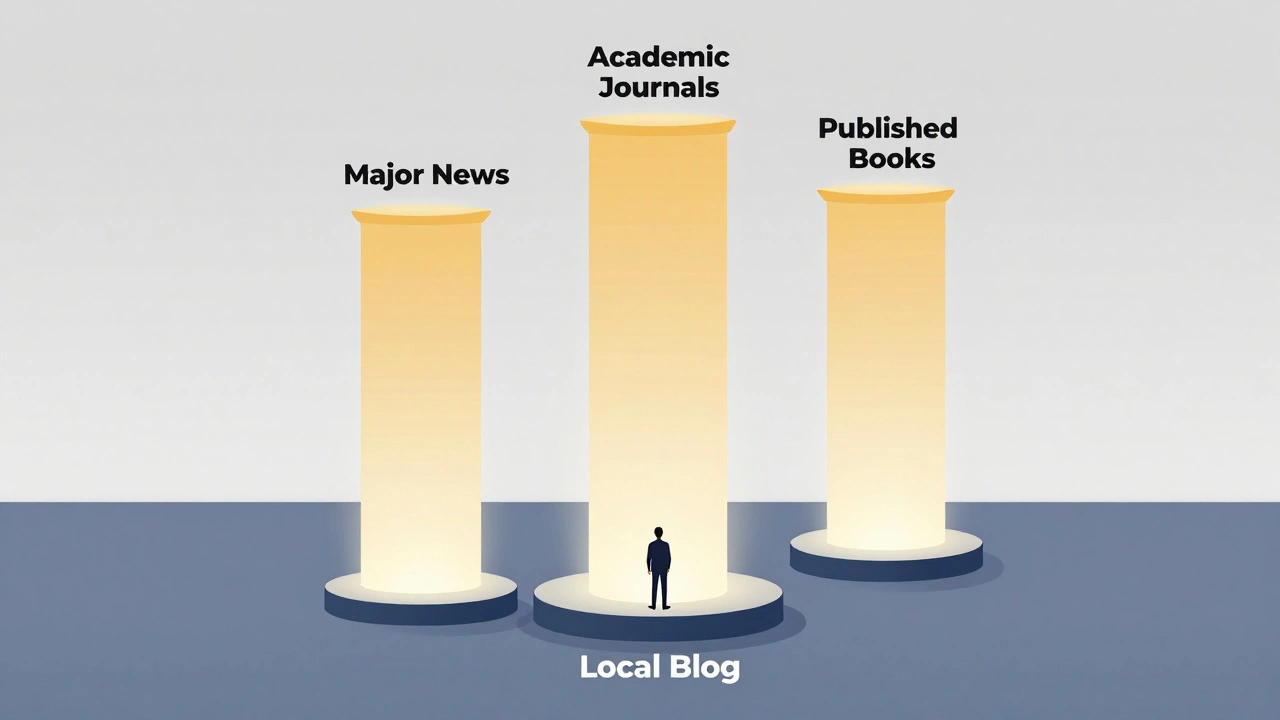
- Good: Major newspapers, peer-reviewed academic journals, reputable trade magazines, published books from established publishers.
- Risky: Local newspapers (unless the event was local), niche industry blogs (only if highly respected).
- Bad: Social media, press releases, self-published material, wikis, forums.
If your draft relies on risky or bad sources, replace them. Search for interviews in major magazines or find news reports from established news agencies. The more authoritative the source, the less likely your article is to be challenged later.
Structural Issues: Original Research and Synthesis
Even with great sources, your article can be deleted if it presents Original Research is new analysis, conclusions, or theories that have not been published elsewhere in reliable sources. Wikipedia is a summary of existing knowledge, not a place to publish new ideas. If you read three different articles and combined them to form a new conclusion that none of the authors stated explicitly, you are engaging in original research. This is strictly forbidden.
Editors also look for proper attribution. Every claim needs a citation. If you say "Company X lost $1 million in Q3," you must link to a financial report or news article that states exactly that. Vague statements like "Many experts believe..." without a specific citation are red flags. The rule is simple: if it’s not cited, it’s assumed to be false or opinionated, and it gets cut.
Additionally, ensure your article follows the standard structure: lead section, early history, development, impact, and references. Jumping straight into details without context confuses readers and editors alike. A clear, logical flow helps reviewers see that you’ve done your homework.
How to Recover from a Deletion
Getting deleted doesn’t mean giving up. Most deletions come with a reason. Read the deletion notice carefully. It will tell you whether the issue was notability, sourcing, conflict of interest, or original research. Once you identify the problem, you can address it.
- Request a Review: If you believe the deletion was a mistake, you can ask for a second opinion on the article’s talk page or through the Articles for Creation discussion area.
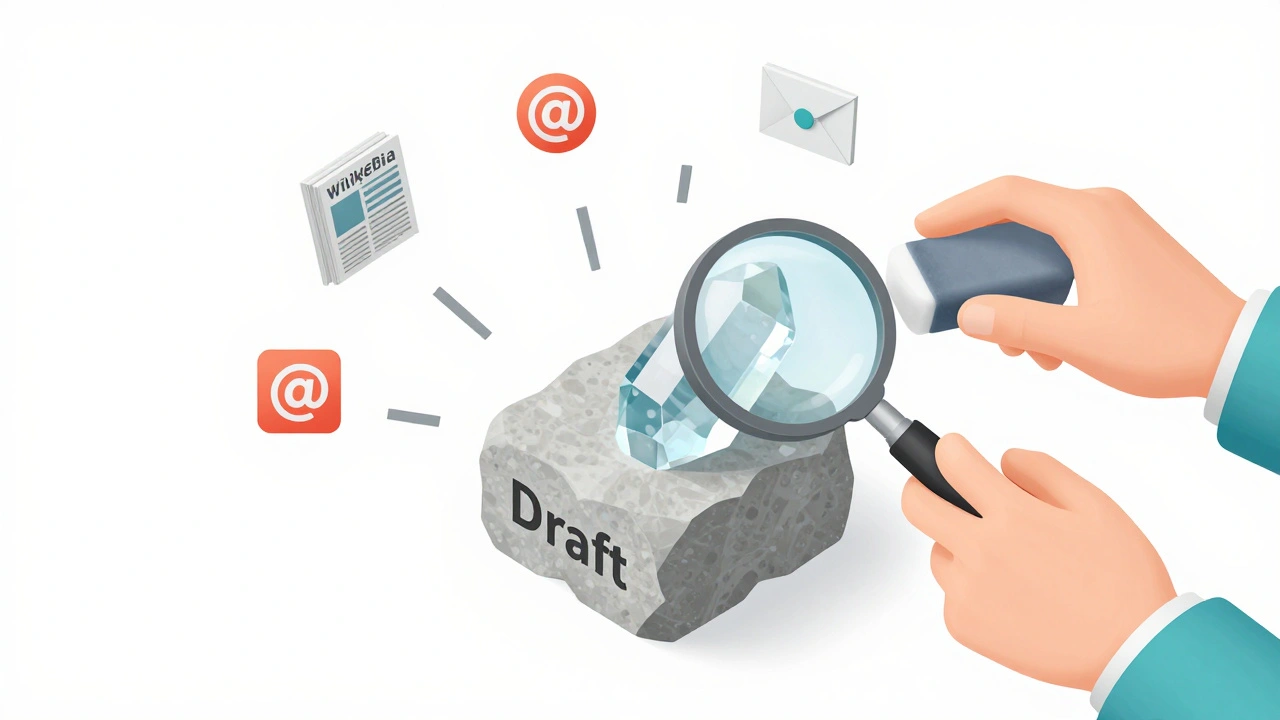
- Improve the Draft: Add more reliable sources, remove promotional language, and clarify citations. Resubmit the improved version.
- Use the Draft Space: Work on your article in your user space (a private sandbox) until it meets all guidelines. Ask experienced editors to review it before submitting it for publication.
Patience is key. Editors are volunteers working in their spare time. Respond politely and professionally to feedback. Arguing aggressively usually backfires. Instead, focus on improving the content based on the specific criteria mentioned in the rejection.
| Reason for Rejection | What It Means | How to Fix It |
|---|---|---|
| Lack of Notability | Subject hasn't received significant coverage in reliable sources. | Find 3+ independent, high-quality sources (major news, academic journals). |
| Conflict of Interest | Editor perceives bias due to personal or financial connection. | Remove promotional language, disclose COI, use neutral tone. |
| Unreliable Sources | Citations include blogs, social media, or self-published material. | Replace with reputable news outlets, books, or peer-reviewed studies. |
| Original Research | Article presents new conclusions or analysis not found in sources. | Stick to summarizing existing published information only. |
| Poor Structure | Article lacks logical flow, lead section, or proper citations. | Follow standard Wikipedia layout: Lead, History, Development, References. |
Preventing Future Deletions
To avoid the frustration of repeated rejections, start strong. Before writing a single word, search Wikipedia to see if the topic already exists. Duplicate articles are deleted instantly. Next, gather your sources first. If you can’t find three solid, independent sources, don’t bother writing the article yet. Wait until more coverage appears.
Engage with the community early. Post your draft idea on the Teahouse is a friendly help desk on Wikipedia where new editors can ask questions and get guidance from experienced volunteers. Experienced editors can tell you if your topic is viable before you invest weeks of work. This proactive approach saves time and builds goodwill.
Finally, remember that Wikipedia is a collaborative project. Your goal isn’t to win an argument; it’s to contribute valuable, verifiable knowledge. By respecting the guidelines and focusing on quality over quantity, you increase your chances of success significantly.
Why did my Wikipedia article get deleted?
Your article was likely deleted due to lack of notability, unreliable sources, conflict of interest, or original research. Check the deletion notice for specific reasons. Common issues include using press releases as sources or writing about a subject that hasn't received significant coverage in major news outlets.
Can I resubmit a deleted Wikipedia article?
Yes, you can resubmit if you address the reasons for deletion. Improve the draft by adding reliable sources, removing promotional language, and ensuring neutrality. Use the Article Creation Wizard to submit the revised version for review.
What counts as a reliable source for Wikipedia?
Reliable sources include major newspapers, peer-reviewed academic journals, reputable trade magazines, and books from established publishers. Social media, blogs, press releases, and self-published materials are generally not considered reliable.
How do I prove notability for a person or company?
You need at least three independent, reliable sources that provide significant coverage of the subject. These sources should focus primarily on the person or company, not just mention them briefly. Avoid sources controlled by the subject, such as their own website or press releases.
Is it okay to write an article about myself or my company?
It is discouraged due to conflict of interest. If you must, disclose your connection and use the Article Creation Wizard. Write in a neutral tone, avoid promotional language, and rely solely on independent, reliable sources. Many editors prefer that subjects not write their own articles.