There is a persistent myth in university libraries that citing Wikipedia is an automatic mark of intellectual laziness. Yet, if you walk through any modern research lab or ask a graduate student about their workflow, the picture is far more nuanced. Wikipedia isn't just a fallback for when peer-reviewed journals are paywalled; it has become a primary gateway for discovery. The real question isn't whether academics use it-they do-but how they perceive its reliability compared to traditional sources.
The Current State of Academic Engagement
To understand the shift, we have to look at the numbers. A comprehensive survey conducted by the University of Wisconsin-Madison in collaboration with other institutions revealed that over 90% of faculty members use Wikipedia during their professional duties. This isn't limited to humanities; scientists and engineers rely on it heavily for quick fact-checking and background context. The perception has moved from "dangerous unverified content" to "a useful, albeit imperfect, starting point."
This engagement stems from practicality. Academic life is fast-paced. When a researcher needs a quick definition of a complex biological process or a historical date to frame a grant proposal, waiting for a library inter-library loan request is inefficient. Wikipedia provides immediate access to summarized knowledge. However, this convenience comes with a caveat that every academic knows: the information is only as good as the last editor who touched it. This creates a unique dynamic where trust is conditional, not absolute.
Why Academics Still Rely on It
You might wonder why anyone would trust a platform where anyone can edit. The answer lies in the curation model. While Wikipedia operates on a free-content model allowing unlimited user edits, the most viewed articles are monitored closely. High-traffic pages often have dozens of regular editors who revert vandalism within minutes. For many scholars, the top 10% of Wikipedia articles-those covering major scientific concepts, famous figures, and established historical events-are surprisingly robust.
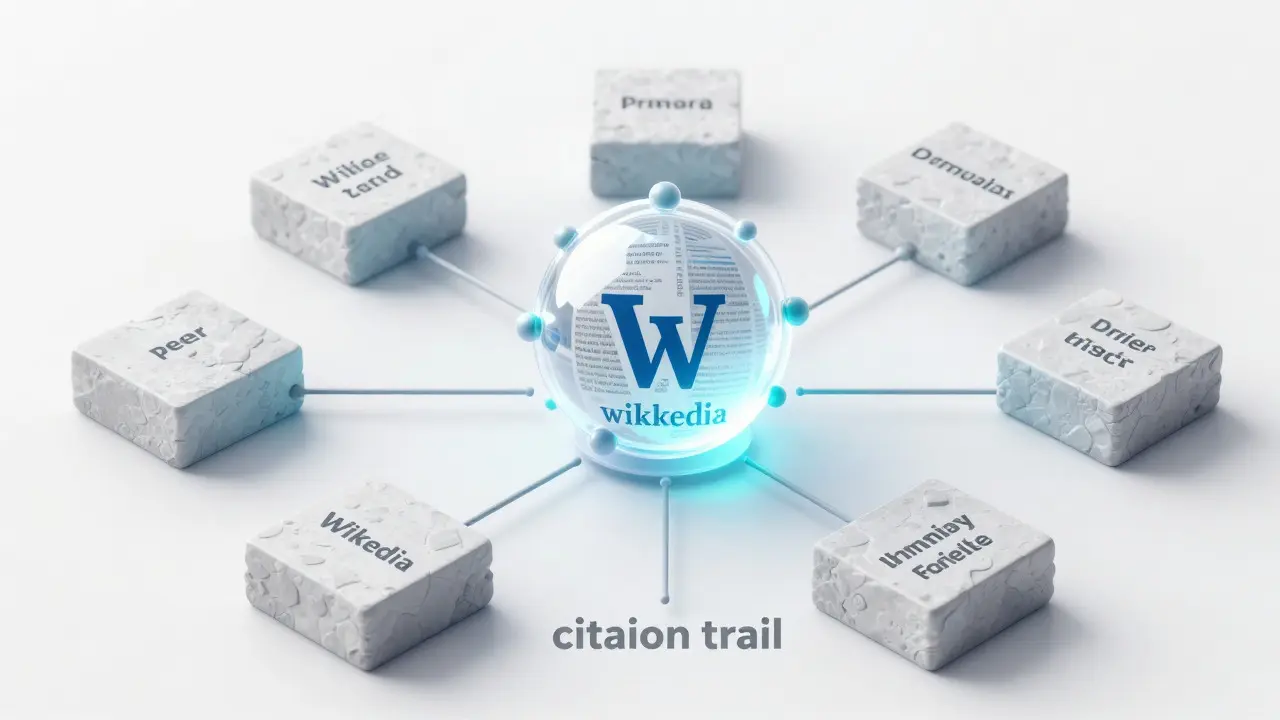
Another major driver is the citation trail. Unlike a blog post or a forum thread, Wikipedia entries require inline citations. If you read a claim about quantum mechanics, you can click the footnote and see exactly which journal article or textbook supports it. This transparency allows researchers to verify claims quickly without hunting down obscure papers immediately. It acts as a meta-review, summarizing the consensus of the field before you dive into the primary literature.
The Credibility Gap: Where Trust Breaks Down
However, the trust erodes quickly as you move away from mainstream topics. In niche fields, such as specific sub-disciplines of sociology or emerging areas of nanotechnology, the editorial oversight thins out. Here, the risk of bias or outdated information increases. Academics often report feeling confident about Wikipedia's coverage of broad history or physics but hesitant about its treatment of controversial political issues or highly specialized medical treatments.
There is also the issue of recency. Peer-reviewed journals take months to publish findings. Wikipedia updates in real-time. While this is great for breaking news, it means that rapidly evolving fields like AI or genetics can have conflicting information on the page until the community agrees on a new standard. For a researcher writing a paper, relying on a summary that changed three days ago is risky. They need stability, which Wikipedia doesn't always guarantee.
Comparison with Traditional Sources
To visualize this tension, let's compare Wikipedia directly with the two main alternatives academics use: peer-reviewed journals and encyclopedias like Britannica.
| Feature | Wikipedia | Peer-Reviewed Journals | Traditional Encyclopedias |
|---|---|---|---|
| Update Frequency | Real-time (Minutes) | Slow (Months/Years) | Annual Editions |
| Cost to Access | Free | Often Paywalled | Subscription/Library |
| Verification Method | Citation Trail + Community Consensus | Expert Peer Review | Professional Editors |
| Risk of Bias | Moderate (Editorial War) | Low (Methodological Rigor) | Low (Institutional Control) |
| Best Use Case | Discovery & Context | Primary Evidence | General Reference |
As you can see, Wikipedia wins on speed and cost. Journals win on rigor. Traditional encyclopedias sit in the middle but suffer from obsolescence. Most academics now adopt a hybrid approach: they start with Wikipedia to map the landscape, then follow the citations to the primary sources for deep work.
Strategies for Verifying Wikipedia Content
If you are a student or early-career researcher, how do you protect yourself from bad data? The first rule is to never cite Wikipedia as a primary source. It is a secondary source, a guide to finding the primary ones. When you find a useful paragraph, check the references section. Are the sources recent? Are they from reputable institutions? If the key claims rely on obscure blogs or self-published books, your confidence should drop significantly.
Second, check the talk page. Every Wikipedia article has a discussion board where editors debate changes. If there is a heated argument about a specific fact, it’s a red flag. It means the consensus hasn’t settled yet. Third, look at the article's history. If the same few users keep making large, unexplained edits, the article might be compromised. Tools like WikiTracker can help you spot these patterns, giving you a clearer picture of the article's health than just reading the text.
The Role of Open Access Movements
The rise of open access publishing is further changing the dynamic. As more universities mandate that publicly funded research be freely available, the gap between Wikipedia and primary literature narrows. Projects like PubMed Central allow direct access to full-text articles. This reduces the need for Wikipedia as a workaround for paywalls, shifting its role purely to one of navigation and synthesis. Academics are increasingly viewing Wikipedia not as a replacement for scholarship, but as the index card system of the digital age.
Frequently Asked Questions
Is it acceptable to cite Wikipedia in a PhD thesis?
Generally, no. Most style guides, including APA and Chicago, discourage citing Wikipedia as a primary source. Instead, use Wikipedia to find the original studies or books, and cite those. If you must reference the Wikipedia page itself (for example, to discuss the state of public knowledge), cite it as a tertiary source with a specific revision date.
How accurate is Wikipedia for science topics?
Highly accurate for established facts. Studies comparing Wikipedia to professional encyclopedias have shown comparable accuracy for basic sciences. However, for cutting-edge discoveries, the information may lag behind or reflect ongoing debates. Always verify with recent peer-reviewed literature for active research areas.
What is the biggest risk of using Wikipedia for research?
The biggest risk is anchoring bias. Because Wikipedia presents a synthesized view, readers may stop looking for alternative perspectives. If the article reflects a particular cultural or political bias, the researcher might miss counter-arguments that exist in primary literature but haven't been integrated into the summary yet.
Do professors check if students used Wikipedia?
Most don't penalize usage, but they penalize poor sourcing. If a student cites a Wikipedia page instead of the book referenced within that page, it signals a lack of depth. Professors generally prefer to see the original sources, proving the student did the work to trace the information back to its root.
How does Wikipedia handle conflicts in expert opinion?
It aims for neutral point of view (NPOV). This means presenting all significant views proportionately. If experts disagree, the article should reflect that disagreement rather than picking a side. You can usually identify this by seeing multiple viewpoints listed with citations to different camps of experts.