Copyright Law and Wikipedia: How Legal Rules Shape Free Knowledge
When you read a Wikipedia article, you’re seeing the result of strict rules around copyright law, the legal system that controls who can copy, share, or build on creative works. Also known as intellectual property law, it’s the invisible hand behind every quote, image, and fact on the site. Without clear boundaries set by copyright law, Wikipedia couldn’t exist as a free, open encyclopedia. This isn’t just about avoiding lawsuits—it’s about keeping knowledge truly free. Every edit, every citation, every photo uploaded has to pass a legal filter: is this content allowed under copyright rules? Can it be reused without permission? Is it old enough to be in the public domain, works no longer protected by copyright and free for anyone to use? Or does it qualify as fair use, a limited exception that lets you use copyrighted material for education, commentary, or news without permission? These aren’t abstract ideas—they’re daily decisions made by thousands of volunteers.
Wikipedia doesn’t just follow copyright law—it pushes back against its limits. Editors constantly debate whether a photo from a museum archive should be allowed, whether a news article can be summarized, or whether a song lyric counts as fair use. The Wikimedia Foundation, the nonprofit that supports Wikipedia and its sister projects has to defend these choices legally, especially when copyright holders threaten takedowns. That’s why Wikipedia’s policies are so detailed: they’re built from real legal cases, court rulings, and years of trial and error. You won’t find copyrighted movie posters or full song lyrics here—not because editors are overly cautious, but because they’ve learned the hard way what happens when you cross the line. Even something as simple as copying text from a book can get an article deleted if it’s not properly cited or if the source isn’t compatible with Wikipedia’s open license.
What you’ll find in these posts isn’t just theory. You’ll see how copyright law affects real editing workflows—how editors use the Wikipedia Library to access paywalled sources legally, how GLAM institutions share cultural materials under open licenses, and how news corrections trigger updates to avoid legal risk. You’ll learn how edit filters block plagiarism, how article assessments flag unlicensed content, and why preprints are banned not for being new, but because they lack legal protection. This collection shows copyright law not as a barrier, but as the foundation that makes Wikipedia’s mission possible: a world where anyone can share what they know, without stealing from others.
Legal and Ethical Risks of Copying Wikipedia Text in News Articles
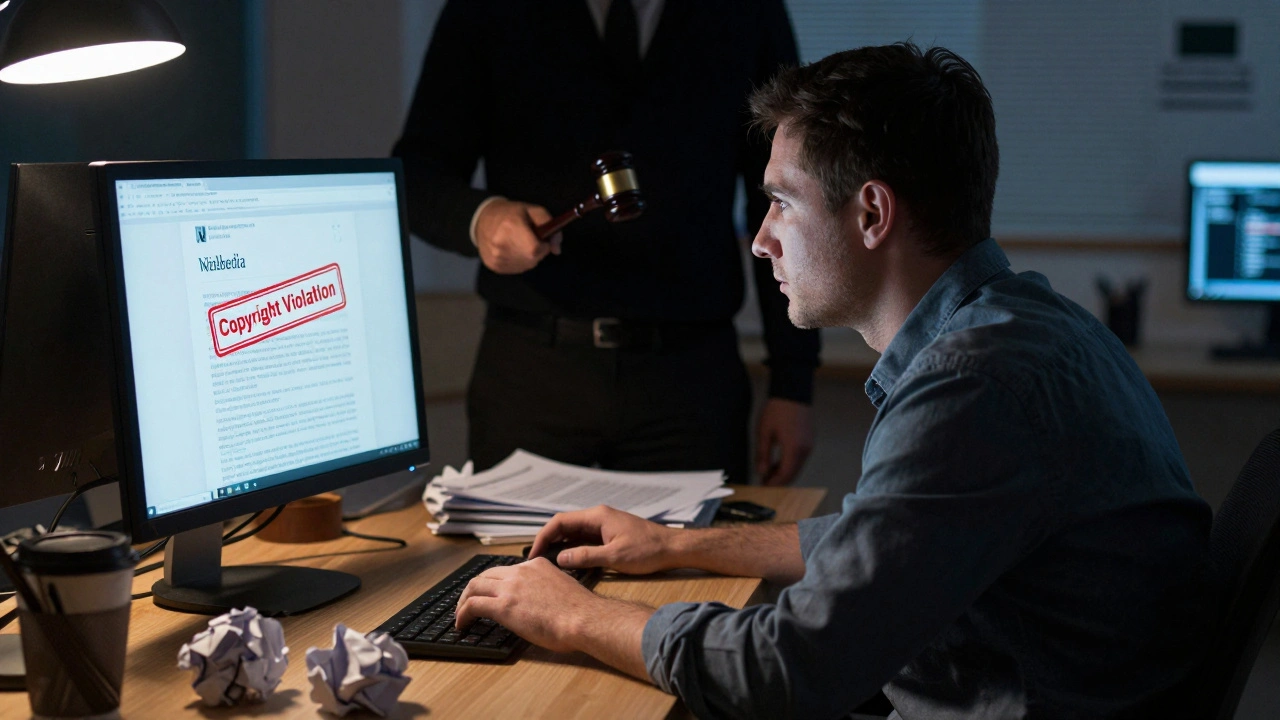
Copying Wikipedia text into news articles may seem harmless, but it carries real legal and ethical risks. Journalists who do this risk copyright violations, loss of credibility, and even lawsuits. Here's how to use Wikipedia safely-and why you shouldn't treat it as a source.
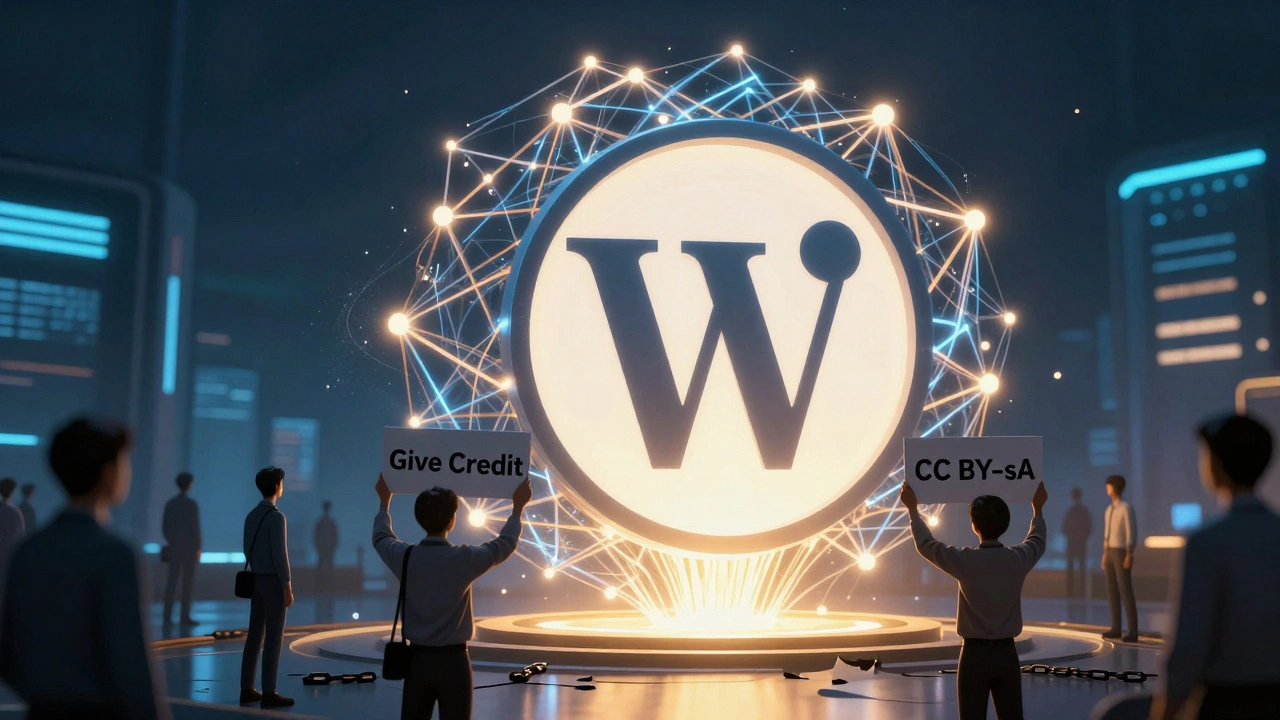
How the Wikimedia Foundation Is Tackling AI and Copyright Challenges
The Wikimedia Foundation is fighting to protect Wikipedia's open knowledge from being exploited by AI companies. They're enforcing copyright rules, building detection tools, and pushing for legal change to ensure AI gives credit where it's due.