Open Collaboration on Wikipedia: How Shared Editing Builds Reliable Knowledge
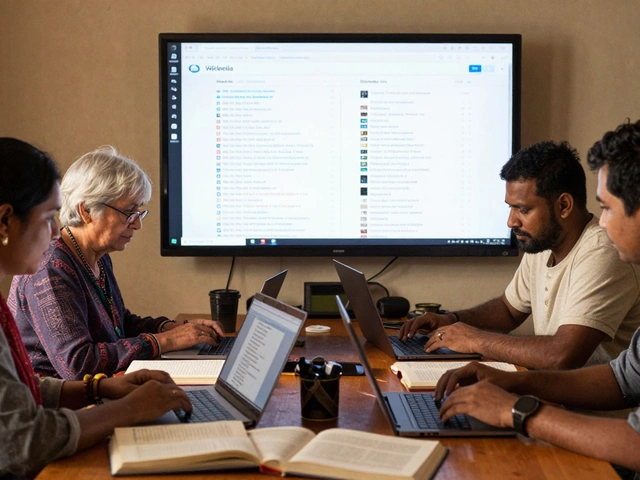
When you think of open collaboration, a system where anyone can contribute to a shared project without formal approval. Also known as community-driven knowledge building, it’s the engine behind Wikipedia’s ability to update faster than any encyclopedia in history. This isn’t chaos—it’s structured trust. Thousands of volunteers, not paid staff, fix errors, add sources, and debate wording every minute. The system works because every edit is visible, every change is trackable, and every decision is open to review.
Open collaboration doesn’t happen in a vacuum. It needs Wikipedia edit history, a public record of every change made to an article, who made it, and when. This transparency lets users trace how facts evolve and spot bad edits fast. It also depends on Wikipedia talk pages, the hidden discussion boards where editors argue, negotiate, and agree on content before it appears in articles. These aren’t side chats—they’re the real decision-making layer of Wikipedia. And when conflicts arise, tools like Huggle, a real-time vandalism detection tool used by volunteers to revert spam and malicious edits in seconds keep the system clean. Without these tools, open collaboration would collapse under its own scale.
What makes open collaboration on Wikipedia different from other open projects? It’s not just about letting people edit—it’s about enforcing rules that force quality. You can’t just say something is true; you need a reliable source. You can’t promote your own work; you need neutrality. You can’t ignore feedback; you need to listen. This balance—freedom with responsibility—is why Wikipedia survives. It’s not perfect. It excludes oral traditions. It struggles with bias. But it’s the most transparent knowledge system ever built. And it’s all powered by people who care enough to show up, argue, and fix things.
Below, you’ll find real stories from inside this system: how editors handle conflicts, how news corrections ripple through articles, how mentorship keeps volunteers from quitting, and how tools like Wikidata help connect languages and facts across the globe. This isn’t theory—it’s practice. And it’s happening right now, every second, in every language, on every topic you can think of.

Community Governance on Wikipedia vs Corporate Editorial Control
Wikipedia relies on volunteers and open collaboration, while corporate encyclopedias like Britannica use paid editors and strict control. Which model delivers better, more accurate knowledge? Here’s how they really compare.

Why Wikipedia Avoids Top-Down Editorial Control Despite Global Scale
Wikipedia thrives without top-down control by relying on community norms, transparent processes, and open collaboration. Millions of edits daily are guided by policy, not authority - making it one of the most resilient knowledge systems ever built.